Shows like Black Mirror
Speculative premises that expose an ordinary human weakness.
Starting with Black Mirror (2011)
Title details on TMDB ↗
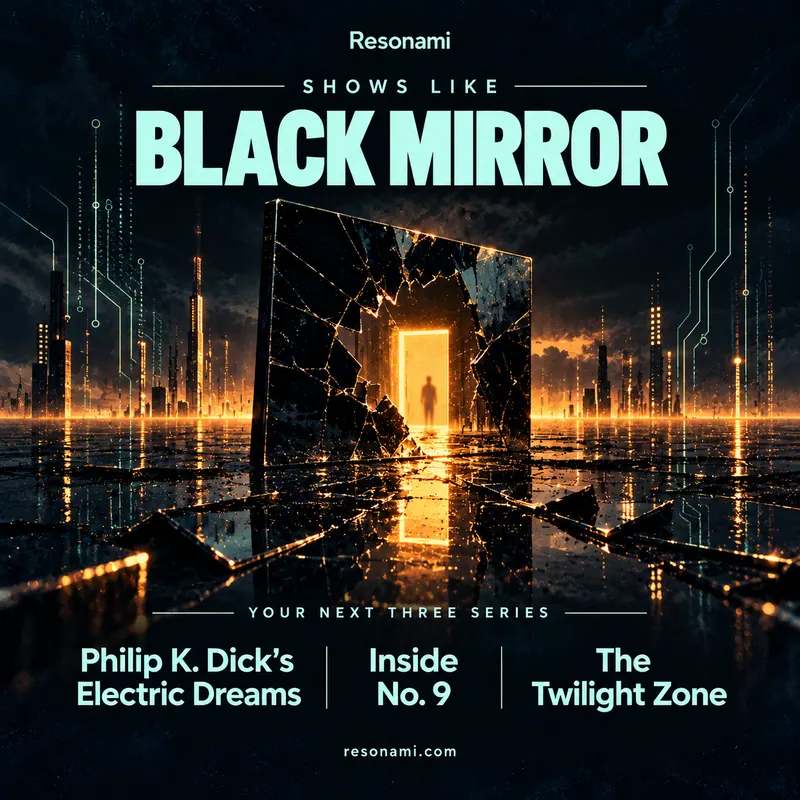
What should I watch after Black Mirror?
For Black Mirror fans, these three shows offer different ways forward: Philip K. Dick's Electric Dreams (A science-fiction premise each time); Inside No. 9 (A small space with an unstable story); The Twilight Zone (The classic speculative turn). Each comparison below explains the connection and where the experience differs.
Black Mirror works best when a strange invention or social rule makes familiar desires newly uncomfortable. These anthology alternatives vary in how much speculative technology they use, but each lets an individual episode build toward a troubling change of perspective.
Electric Dreams is the most directly science-fictional, Inside No. 9 favors contained theatrical traps, and the original Twilight Zone provides an earlier model of speculative moral storytelling. Episode tones vary widely within each series; a shared format does not mean every installment is equally bleak.
Which direction interests you?
Start with the connection you want, then read the differences before choosing.
Philip K. Dick's Electric Dreams
A science-fiction anthology explores questions of identity, technology, and what makes us human.
Title details on TMDB ↗Why it connects
Philip K. Dick’s Electric Dreams uses separate speculative stories to test identity, trust, and social arrangements. Its strongest connection is the way an apparently distant future reveals a recognizable present-day anxiety.
Where it differs
The episodes adapt different Philip K. Dick stories and vary in scale. The tone is often more openly fantastical than Black Mirror’s near-future social satire.
Inside No. 9
Compact dark-comedy stories use confined settings, tonal surprises, and sharply drawn characters.
Title details on TMDB ↗Why it connects
Inside No. 9 builds standalone situations around limited settings and carefully managed information. Choose it for formal ingenuity, uncomfortable humor, and the pleasure of realizing an episode has been asking a different question.
Where it differs
Technology is not the organizing principle. Many episodes are dark comedy, crime, or theatrical character pieces rather than science fiction.
The Twilight Zone
The original anthology uses speculative premises to probe everyday fears and human behavior.
Title details on TMDB ↗Why it connects
The Twilight Zone uses an impossible situation to expose a human or social assumption. It connects through the standalone moral experiment and the way a final shift can recast what came before.
Where it differs
This recommendation is the original 1959 series. Its shorter, older television rhythms and explicit narration differ from Black Mirror’s longer modern episodes.
These are editorial comparisons of themes, tone, and storytelling, rather than a numerical ranking or personalized results. Title identities were checked against the linked catalog or publisher records on October 25, 2026. The connections and differences are Resonami’s analysis. Sources provide title context; availability and editions can vary. Read our editorial approach and corrections policy.
Dates distinguish the film or original series being discussed. A similar premise can still mean a very different level of violence or intensity.