Movies like The Shawshank Redemption
Hope inside institutions designed to take it away.
Starting with The Shawshank Redemption (1994)
Title details on TMDB ↗
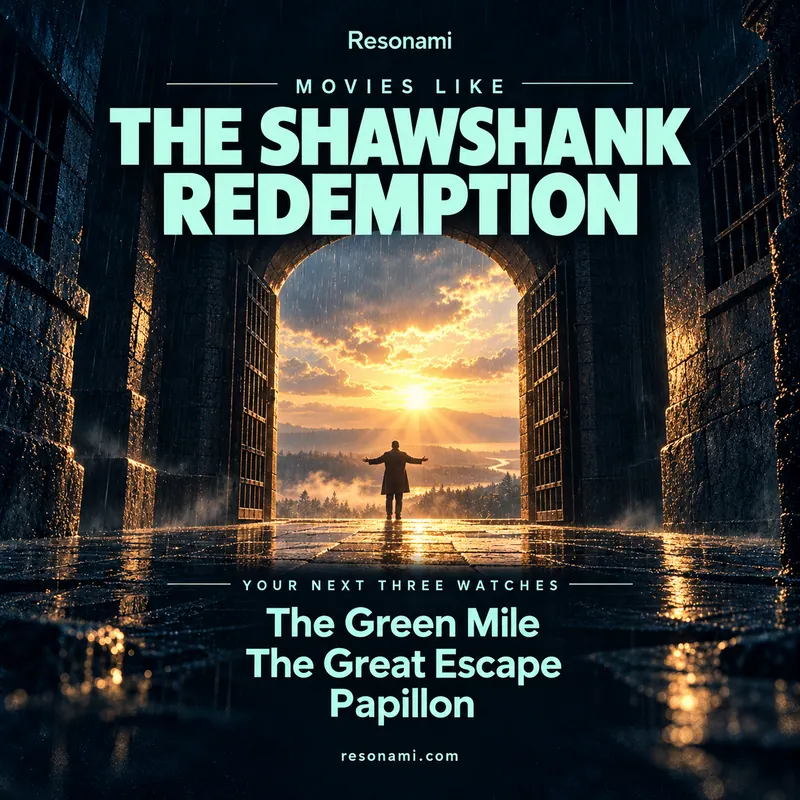
What should I watch after The Shawshank Redemption?
For The Shawshank Redemption fans, these three movies offer different ways forward: The Green Mile (Compassion and moral uncertainty); The Great Escape (Planning and camaraderie); Papillon (Stubborn survival). Each comparison below explains the connection and where the experience differs.
The Shawshank Redemption is often remembered for escape, but much of its power comes from companionship, routine, and the slow defense of a private inner life. Another prison film is only a good match if it offers the kind of endurance you responded to.
Start with The Green Mile for compassion, The Great Escape for coordinated ingenuity, or Papillon for a harsher survival journey. These are different historical and fictional settings; shared confinement does not mean the films have the same outlook or level of brutality.
Which direction interests you?
Start with the connection you want, then read the differences before choosing.
The Green Mile
A prison drama with compassion, moral questions, and a supernatural thread.
Title details on TMDB ↗Why it connects
The Green Mile shares Shawshank’s interest in how people preserve decency within a prison. Its ensemble gives everyday gestures weight, while the institution forces characters to confront the limits of their power to help.
Where it differs
A supernatural element shapes this story, and its focus moves toward the guards and death row. Expect grief alongside warmth.
The Great Escape
Resourcefulness and camaraderie drive a daring prisoner-of-war escape story.
Title details on TMDB ↗Why it connects
The Great Escape makes preparation, small acts of resistance, and trust between prisoners dramatically satisfying. It is the closest pick here if the practical ingenuity of Shawshank’s escape is what you want to revisit.
Where it differs
The setting is a wartime prisoner-of-war camp. The larger ensemble and adventure rhythms leave less room for an intimate narrator-led friendship.
Papillon
An enduring friendship anchors a harsh story of imprisonment and determination.
Title details on TMDB ↗Why it connects
Papillon centers the refusal to accept a life defined by captivity. Friendship matters, but so do exhausting physical conditions and repeated efforts to find an opening, giving perseverance a more punishing texture.
Where it differs
Choose the 1973 film for this comparison. Its physical ordeals and abrasive survival tone are tougher than Shawshank’s reassuring storytelling voice.
These are editorial comparisons of themes, tone, and storytelling, rather than a numerical ranking or personalized results. Title identities were checked against the linked catalog or publisher records on October 25, 2026. The connections and differences are Resonami’s analysis. Sources provide title context; availability and editions can vary. Read our editorial approach and corrections policy.
Dates distinguish the film or original series being discussed. A similar premise can still mean a very different level of violence or intensity.