Movies like Pulp Fiction
Criminal conversations, crossed paths, and comic danger.
Starting with Pulp Fiction (1994)
Title details on TMDB ↗
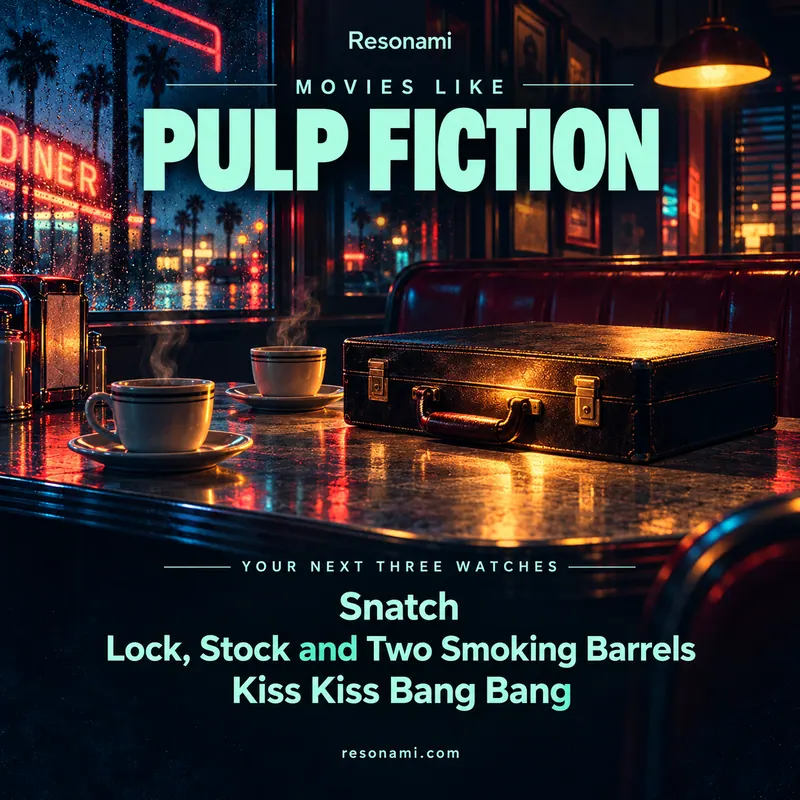
What should I watch after Pulp Fiction?
For Pulp Fiction fans, these three movies offer different ways forward: Snatch (Intersecting criminal schemes); Lock, Stock and Two Smoking Barrels (A plan unraveling); Kiss Kiss Bang Bang (Crime and an unreliable storyteller). Each comparison below explains the connection and where the experience differs.
Pulp Fiction makes conversations as memorable as crimes, and its rearranged episodes let small choices collide in surprising ways. A similar watch might emphasize a web of criminals, a caper that keeps going wrong, or a narrator who cannot quite control the story.
Snatch and Lock, Stock and Two Smoking Barrels offer fast-moving British ensembles. Kiss Kiss Bang Bang brings a Hollywood detective story and a self-aware voice. All three mix violence with comedy, though their rhythms and perspectives differ.
Which direction interests you?
Start with the connection you want, then read the differences before choosing.
Snatch
A tangled crime caper brings fast dialogue and an unruly cast of characters.
Title details on TMDB ↗Why it connects
Snatch turns valuable objects, stubborn personalities, and bad decisions into a chain reaction. Choose it for the pleasure of watching apparently separate players become one increasingly difficult problem.
Where it differs
Its energy is that of a fast caper, with a large cast and emphatic narration. It is less interested in Pulp Fiction’s extended conversational pauses.
Lock, Stock and Two Smoking Barrels
Overlapping schemes turn a London crime story into a comic chain reaction.
Title details on TMDB ↗Why it connects
Lock, Stock and Two Smoking Barrels builds momentum from a debt and overlapping attempts to escape it. Like Pulp Fiction, it finds comedy in the gap between criminal confidence and actual control.
Where it differs
The geography and slang are distinctly London-based. Its plot behaves like an escalating farce rather than a set of rearranged chapters.
Kiss Kiss Bang Bang
A Hollywood mystery blends noir intrigue with quick, self-aware banter.
Title details on TMDB ↗Why it connects
Kiss Kiss Bang Bang pairs a messy investigation with a narrator who keeps interrupting his own account. The connection is the playful distance between the dangerous events and the way someone chooses to describe them.
Where it differs
A detective partnership provides more continuity. Hollywood satire and verbal sparring take the place of Pulp Fiction’s broader criminal mosaic.
These are editorial comparisons of themes, tone, and storytelling, rather than a numerical ranking or personalized results. Title identities were checked against the linked catalog or publisher records on October 25, 2026. The connections and differences are Resonami’s analysis. Sources provide title context; availability and editions can vary. Read our editorial approach and corrections policy.
Dates distinguish the film or original series being discussed. A similar premise can still mean a very different level of violence or intensity.